Stealing the Room: How AMC's Scene-Stealers Ended Up Running the Whole House
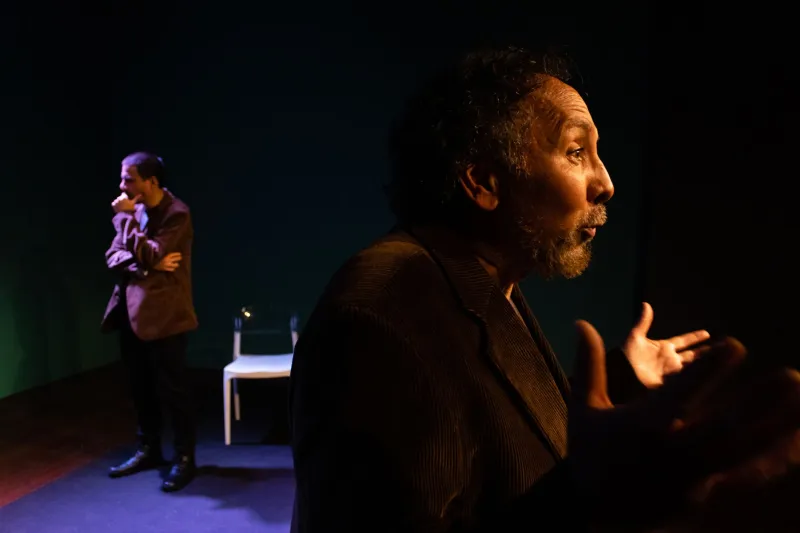
There's a moment in every great ensemble show where the math stops working the way the writers planned. A character who was supposed to be a device — a foil, a plot mechanism, a single-season obstacle — walks into a scene and just refuses to leave. The audience feels it before anyone in the writers' room does. The performance has weight. The character has gravity. And suddenly, the show has a new center it never intended to build.
AMC has lived in that tension more than almost any other network. Its track record with prestige drama is long enough that we can look back and trace the exact episodes where certain performances cracked something open — and where the show either leaned in brilliantly or scrambled to catch up.
The Blueprint: Giancarlo Esposito and the Art of the Slow Burn
If you want to talk about supporting characters who rewrote the rules of their own show, Gus Fring is the place to start. When Breaking Bad introduced the fast-food kingpin in Season 2, he was a recurring presence — unsettling, precise, and quietly menacing. He wasn't the show. Walter White was the show.
Except, somewhere between Season 3 and Season 4, Giancarlo Esposito made Gus Fring into something that felt almost mythological. The writers responded by handing him one of the most remarkable villain arcs in television history. By the time his final scene aired, fans weren't just mourning a character — they were mourning the particular frequency that Esposito had been broadcasting on. The show had reorganized itself around him without ever losing its original spine.
That's the ideal version of this story. The network recognizes what it has, the writers adjust the architecture, and the whole thing gets stronger for it.
When the Sidekick Becomes the Soul
Not every breakout is as clean as that one. Sometimes a supporting performance outgrows its script faster than the show can adapt, and the result is a kind of productive friction — the character pulling harder than the narrative wants to let them.
Better Call Saul is practically a case study in this phenomenon, though it arrived through a slightly different door. Jonathan Banks had been playing Mike Ehrmantraut as a recurring player in Breaking Bad — tough, laconic, morally complicated in ways the show kept hinting at but never fully excavating. Fan response made it clear that audiences wanted more. When Better Call Saul launched, Mike wasn't just a supporting character — he was eventually handed entire episode structures built around his backstory, his grief, his code. Banks delivered every single time.
What's interesting about that particular evolution is that it happened across two shows and nearly a decade of storytelling. The network didn't just recognize a breakout — it built an entire spinoff universe that gave these performances room to breathe in ways the original series couldn't.
The Characters Who Outran Their Own Exits
Sometimes the situation gets messier. A character gets written off — killed, written out, shuffled to the margins — before anyone realizes what they had. The Walking Dead universe has a complicated relationship with this. Actors who brought enormous texture to relatively small roles sometimes found their characters on the wrong end of a story decision that prioritized plot momentum over character investment. The fan response in those cases was often vociferous, and the franchise's sprawling expansion into spinoffs can be read, at least partly, as an attempt to recapture lightning that had already escaped the bottle.
It's a real tension that showrunners face. A breakout performance creates audience expectation. Viewers who fell in love with a character don't easily forgive a narrative that treats that character as expendable. And yet, if every show simply followed its most magnetic performer wherever they led, you'd end up with something shapeless — a vehicle for a star rather than a coherent story.
What Critics Are Watching For
Talk to anyone who covers prestige TV seriously and they'll tell you that spotting these moments early is part of the job. The question isn't just "is this actor good?" — it's "is this performance operating at a different altitude than everything around it, and does the show know it yet?"
The shows that handle it best tend to share a few qualities. Their writers' rooms are flexible enough to revise. Their showrunners are secure enough not to feel threatened by a performance that upstages the original plan. And the network, crucially, is willing to let the story go somewhere it didn't originally map.
AMC's reputation for giving creators room — genuinely unusual room, by network standards — is part of why this keeps happening there. When a Giancarlo Esposito or a Jonathan Banks starts pulling focus, the creative culture is set up to respond rather than resist.
The Ones That Got Away
For every Gus Fring, there are performances that flickered brilliantly and then got quietly sidelined before they could fully ignite. Secondary characters on shorter-run series, guest turns that should have been recurring, supporting players in shows that got cancelled before the writers could fully unlock what they had — the AMC catalog has those too.
The frustrating thing about those cases isn't just what the audience lost. It's that you can often see, in retrospect, exactly where the show could have pivoted. The raw material was there. The performance was there. The timing just didn't line up.
Why This Keeps Happening at AMC Specifically
There's something about the network's commitment to morally complex, long-form storytelling that creates the conditions for these eruptions. When you're building a show around ambiguity — around characters who operate in gray zones, who contain contradictions, who resist easy categorization — you're essentially giving every performer in your cast a chance to find something real. Most of the time, the leads find it. But the format is generous enough that supporting players get the space to find it too.
And occasionally, one of them finds something so specific, so fully realized, that the audience can't look away. The show bends toward them. The writers start writing toward them. The whole gravitational field shifts.
That's not a problem to be managed. That's prestige television doing exactly what it's supposed to do — finding the truth in a performance and following it wherever it goes. The best AMC shows have always understood that. The ones that struggled were the ones that forgot it.
The room doesn't care who was supposed to own it. It belongs to whoever fills it.